As electric vehicles become more common across Texas, more homeowners are looking into installing a home charging station rather than relying entirely on public charging networks. A home EV charger is more convenient, often faster than a standard outlet, and can save time and money over the life of your vehicle. But before you buy a charger, it helps to understand the different types available, what your home’s electrical system needs to support one, and why professional installation matters.
Level 1 vs. Level 2 Charging
Level 1 Charging
Level 1 charging uses a standard 120-volt household outlet — the same kind of outlet you’d plug a lamp or a toaster into. It doesn’t require any special equipment or installation, since most EVs come with a Level 1 charging cable included. The downside is speed: Level 1 charging is slow, often adding only a few miles of range per hour, which makes it more practical for plug-in hybrids or drivers with very low daily mileage than for anyone relying on their EV as a primary vehicle.
Level 2 Charging
Level 2 charging uses a 240-volt circuit, similar to what powers a clothes dryer or an electric range. This is the standard choice for most homeowners with an EV, since it charges significantly faster than Level 1 — often adding 20 to 40 miles of range per hour, depending on the vehicle and charger. Level 2 charging requires a dedicated circuit and a charging unit installed by a licensed electrician, but for most EV owners, the difference in charging speed makes it well worth the investment.
Does Your Electrical Panel Have the Capacity?
This is one of the most important questions to answer before installing a Level 2 charger, and it’s not something to guess at. Older homes, or homes with panels that are already running close to capacity from other major appliances, may not have enough room to safely add a high-draw circuit for EV charging without an upgrade.
A licensed electrician can evaluate your panel’s current capacity and let you know whether it can support a new EV charging circuit as-is, or whether a panel upgrade is needed first. This is a critical step to get right — an EV charger installed on a panel that isn’t equipped to handle the additional load isn’t just inconvenient, it’s a genuine safety risk. If you’re unsure about your panel’s condition, our guide on warning signs your electrical panel may be failing is a good starting point before you move forward with EV charger plans.
What Installation Involves
A typical Level 2 home EV charger installation includes:
- Evaluating your electrical panel’s available capacity
- Running a new dedicated 240-volt circuit from the panel to the charging location
- Installing a properly rated circuit breaker for the charger
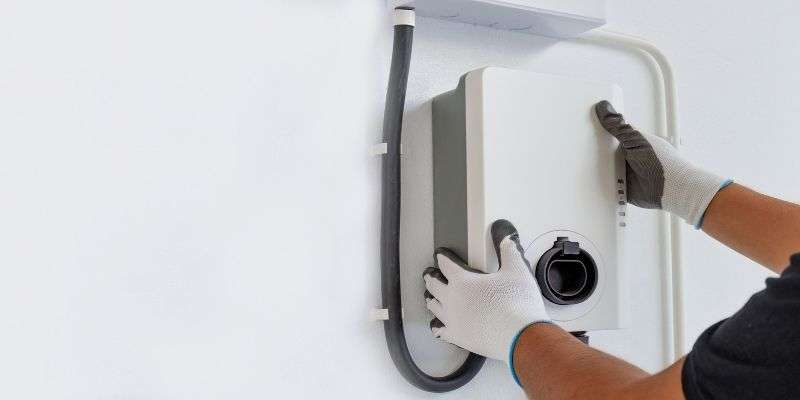
- Mounting and wiring the charging unit itself, whether in a garage or an exterior location
- Ensuring the installation meets local electrical codes and, where applicable, obtaining any required permits
Charger placement matters too. Most homeowners install their charger in the garage, close to where the vehicle is parked, but exterior installations are also common for homes without garage access. Either way, the charger needs to be positioned so the charging cable can comfortably reach the vehicle’s charging port without excessive strain or tripping hazards.
Why Professional Installation Matters
It might be tempting to treat an EV charger installation as a manageable DIY project, especially for homeowners comfortable with basic electrical work. But Level 2 chargers draw significantly more power than standard household circuits, and improper installation carries real risks — overheating, circuit overload, and fire hazards among them.
A licensed electrician ensures:
The circuit is properly sized for your specific charger. Different chargers have different amperage requirements, and the circuit needs to match.
Your panel can safely handle the additional load. This includes accounting for everything else already running on your electrical system, not just the charger in isolation.
The installation meets code. This matters both for safety and for resale — a non-compliant installation can become a real issue if you ever sell your home or need to file an insurance claim related to an electrical incident.
The charger is installed in a safe, functional location. Proper mounting height, weatherproofing for exterior installations, and cable management all matter for long-term, safe use.
Planning Ahead If You Don’t Own an EV Yet
If you’re planning to buy an electric vehicle in the near future but haven’t yet, it can be worth having the circuit and charger installed ahead of time, especially if you’re already doing other electrical work on your home, like a panel upgrade or a remodel. Installing the infrastructure in advance means you won’t have to schedule a separate project later, and it can be more cost-effective to handle it alongside other work already in progress.
Getting Started With EV Charger Installation in Texas
Every home’s electrical system is different, which makes a professional evaluation the right first step before purchasing a charger or committing to a specific installation plan. Our electrical services page covers the residential electrical work we handle, including panel evaluations, upgrades, and new circuit installation for projects like EV charging. If you’re a business owner considering EV charging stations for customers or employees, our commercial electrical services page covers what that process typically involves as well.
If you’re ready to find out whether your home is ready for a Level 2 EV charger, contact us for an evaluation. Mynar Electric proudly serves homeowners and businesses throughout Hutto, Round Rock, Taylor, and the surrounding Texas communities.